By the numbers:
55 applications for the 2023 residential programme
39 Year 11 and 12 young women took part
100% were satisfied with the programme
100% said the programme increased their interest in pursuing a STEMM career
100% would recommend the programme to a friend
20 high schools from Greater Wellington, Horowhenua and Manawatū were represented
80 contributors from 12 STEMM organisations
663 young women impacted by IYM since 2017
Day One: Visit to MPI
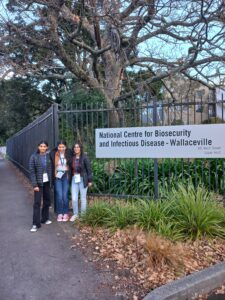
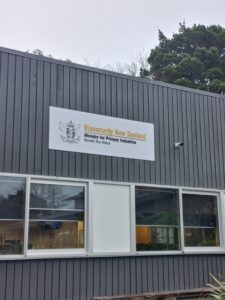
The first site visit for IYM Residential 2023 was to the National Containment Laboratory at the Ministry for Primary Industries (MPI) in Upper Hutt. This state of the art lab is the only Physical Containment Level 3 plus (PC3+) lab in New Zealand. PC3+ refers to the ability for this lab to contain level four pathogens, should they be found in NZ. A level four pathogen includes the Ebola virus 🦠.
We were given a tour of the lab. The labs are temperature and pressure controlled. Tour guides detailed how when entering the PC3+ lab, employees need to shower in, removing all “outside” clothing, shoes and jewellery, swapping them for scrubs and crocs. Depending on what is being worked on, full HAZMAT suits may be worn. These include a food and require the wearer to be fitted to oxygen. Food is sent through a one way metal lock box, designed to be big enough to fit a large pizza box. When it is time to leave, employees shower out.
Monday evening, the participants got to know each other a bit more, with help from Paul Newsom. Paul works for the Young Enterprise Scheme and runs the Innovation Challenge each year at both of IYM’s programmes. This years topic had a focus on Climate Change.
Day Two: NIWA and FNZ
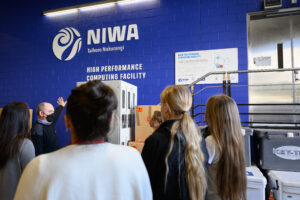
Day two’s first site visit was to the National Institute of Weather and Atmosphere (NIWA) at Evan’s Bay in Wellington. NIWA is a Crown Research Institute, and conducts environmental science to ensure the sustainable management of natural resources for New Zealand and the planet. Check out this video on NIWA’s website which lists the many and varied jobs conducted by NIWA scientists and staff.
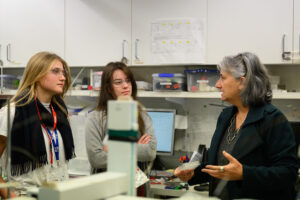
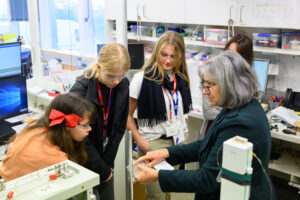
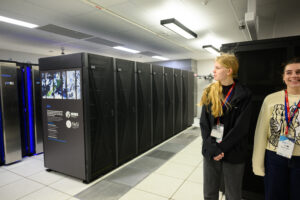
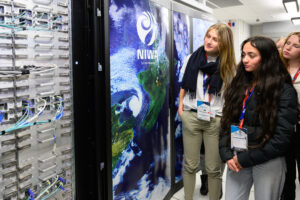
The participants did a session of scientist speed dating, followed by a tour of NIWA’S Wellington campus to see two supercomputers, Māui and Mahuika, in their High Performance Computing Facility (HPCF) and the Mass Spectrometry Laboratory where isotopes are used to determine the feeding habits of whales. Photos to the left show inside the HPCF, where the cooling system creates a breeze in the room. The fans are also quite noisy and staff wear earmuffs if they are in there longer than 15 minutes. The super computers can process more than two thousand trillion calculations a second. The facility can withstand earthquakes and tsunamis, and has its own power generator.
From here, we headed across town to FNZ House to visit our naming sponsors, FNZ. FNZ are a New Zealand finance technology company. Participants enjoyed their lunch and a free drink, courtesy of our hosts.
Day Three: University of Otago, Wellington Hospital Campus
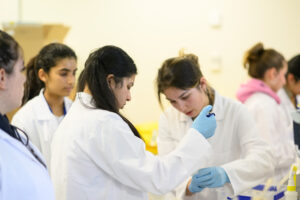
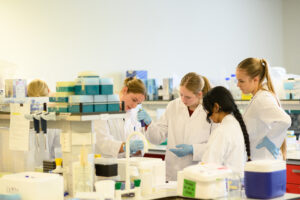
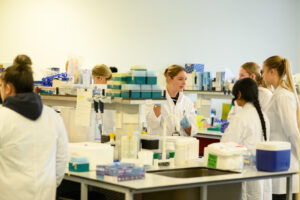
Wednesday morning saw the group spend the whole day with the amazing team at the Otago of University, Wellington campus. We were based in the school of surgery. The participants were rotated around four main activities.
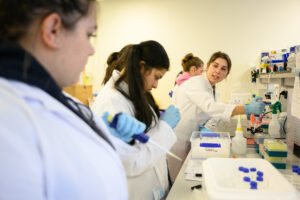
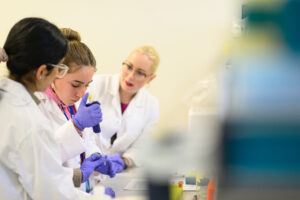
In the lab, participants used a wide range of equipment to isolate breast cancer cells from a sample. They were shown the correct technique to use a pipette to measure very small amounts of reagents.
Participants were also introduced to radiation therapy. The Wellington campus is the home of New Zealand’s only bachelor of Radiation Therapy. Billy, the head of the degree, explained to students the physics behind radiation therapy …. One lucky participant from each group got to make and take home a mask of their head, used to keep a patient still and ensure the accuracy of the beam of radiation during treatment.
The pathology museum had a selection of specimens for viewing, including examples of cancer metastasis through organs, lung cancer caused by smoking, tumours, and a personal favourite, a cast of the inside of a persons stomach made up of their own eaten hair 😬.
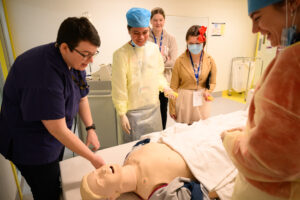
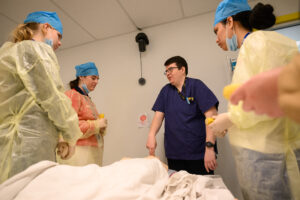
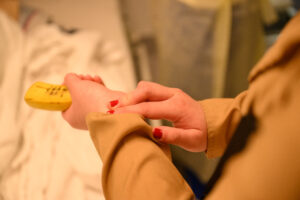
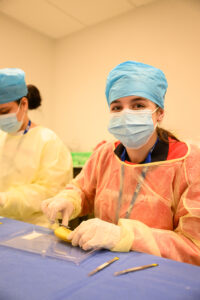
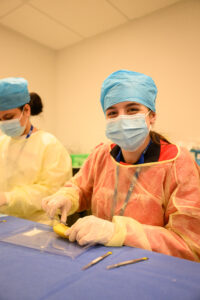
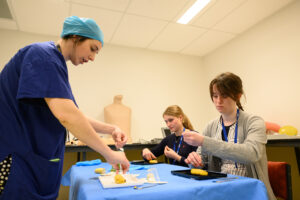
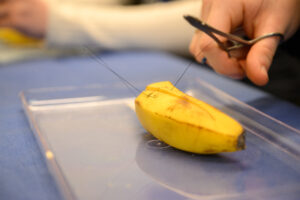
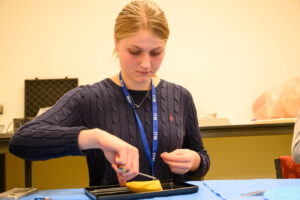
One activity saw the students don full scrubs to ensure the safety of their patients, a banana with a nasty cut. Students were shown how to perform an interrupted suture to close the wound. An interrupted suture is a basic surgical stitch that gets its name from the fact that the individual stitches are not connected. This type of suture is often used to close a “dirty” wound.
Finally, students tried to resuscitate Wiremu, the resuscitation dummy. Participants discussed with the emergency department doctor about “DRS ABCD”s, and what it means for the heart during a heart attack or when there are abnormal heart rhythms. Participants had a go at performing chest compressions on Wiremu. They spoke about how when using a defibrillator on a patient, they do not fly off of the bed as seen in the movies, and when defibrillation is needed, and will actually work.
Day Four: Callaghan Innovation and the Parliamentary Reception
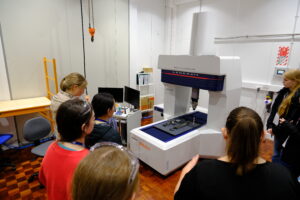
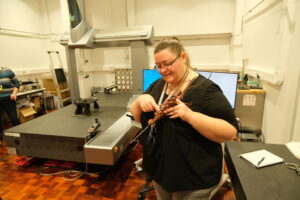
Callaghan Innovation is located in Gracefield, Lower Hutt. For more information about CI, see our section on Wāhine in Science.
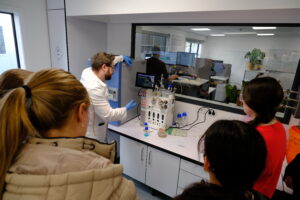
Participants visited Te Kāuru—Ferrier Research Institute, where the team tackle a range of applied chemistry problems related to issues including health and wellbeing and the sustainability of the environment.
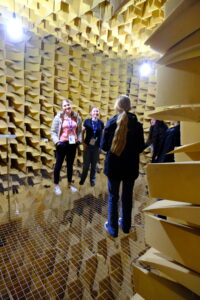
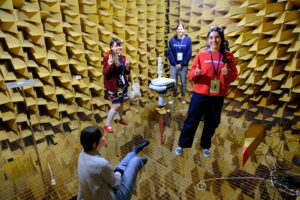
The second part of the tour included a look at one of the quietest places in NZ, the Anechoic Chamber. Callaghan Innovation is home to the Measurement Standards Lab. Here participants got the chance to look at one of their high tech scanners, which can take very accurate measurements of objects. The example we were shown involved Cindy the Crayfish, and demonstrated how the MSL ensure the rulers used to measure crayfish, sent to the public by MPI, are accurate.
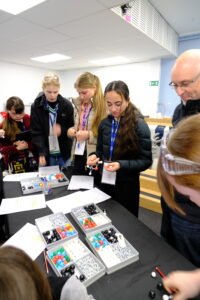
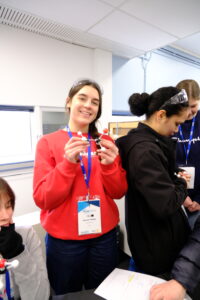
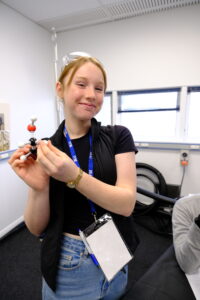
Also located at CI is Paihau—Robinson Research Institute. Paihau partner with businesses to find innovative applied science and engineering solutions and new technologies. For this session, participants were split into smaller groups. Each group were given a bag of pieces to create a solar powdered car. However, they were given no instructions AND there were extra pieces in the bag to put them off.
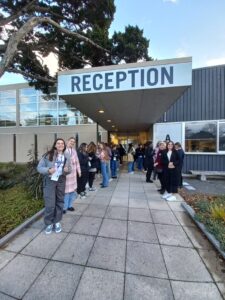
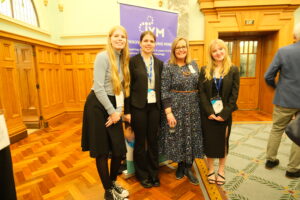
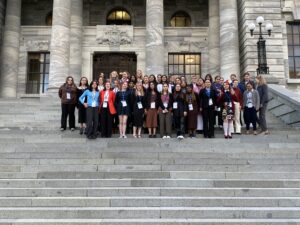
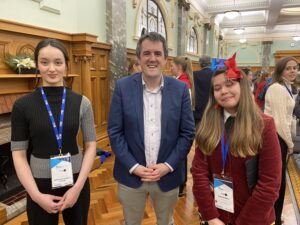
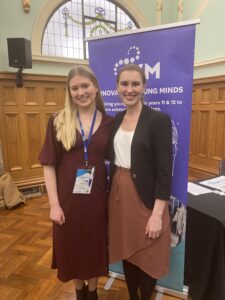
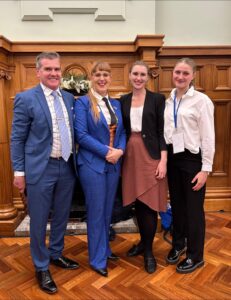
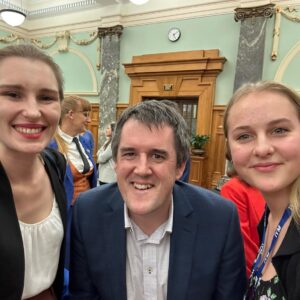
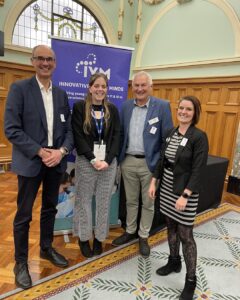
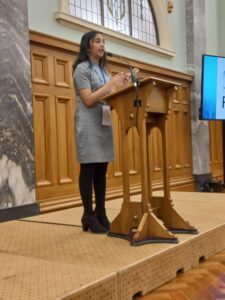
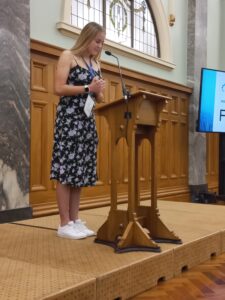
The parliamentary reception is always a highlight for participants! This year, we were hosted in the Grand Hall by Hon. Ginny Andersen and Chris Bishop. The parliamentary reception is a chance for Rotary and business sponsors to meet their participants, and discuss the weeks activities. As a part of the reception, two participants, Sia and Calla, spoke about their IYM experience.
Day Five: WSP and Fraser Engineering
The last day of site visits started with a trip to WSP in Petone. WSP is a global engineering consultancy and research firm, with a focus on water and environment, transport and building. Participants listened to current WSP staff talk about their research, including using sensors to spot potential landslides and how water treatment plants work.
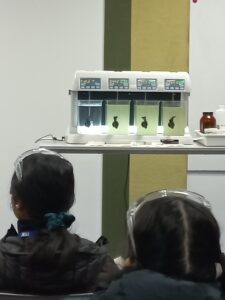
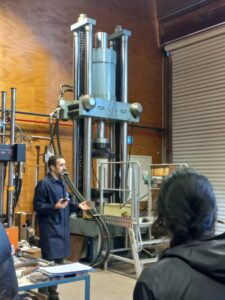
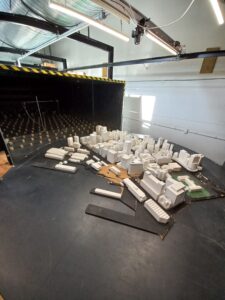
We also had a tour of their workshop. Staff demonstrated how they test the strength of steel samples they are sent. They were currently testing 100 year old steel from a wharf to determine if it was still suitable or if it needed to be replaced. From here, the group moved into the wind tunnel. The wind tunnel is used to test weak points of buildings that are being designed or ways of ensuring sufficient wind flow around buildings to avoid noise. In the photos below, you can see a scale model of the north end of Lambton Quay. Staff used fine rolled oats to show the wind flow through the buildings using different wind directions and speeds.
These scale models were orginally made by hand but are more often now being 3D printed. Staff showed us some of the other models being used, including the Auckland Sky Tower and a new hanger for the Auckland airport.
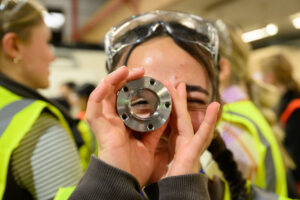
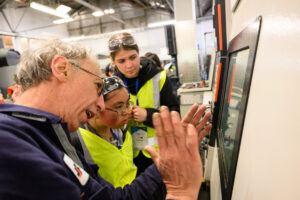
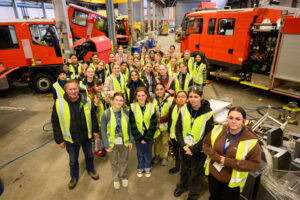
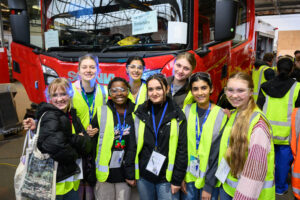
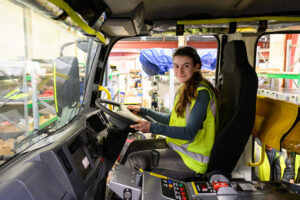
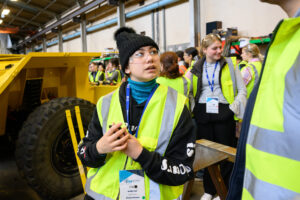
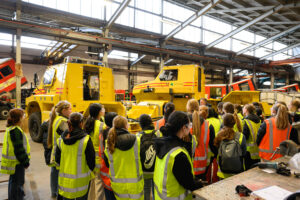
Our last visit for 2023 was to Fraser Engineering in Taita, Lower Hutt. This workshop is so big that it spans two blocks. Fraser Engineering NZ Ltd build fire engines for the New Zealand Fire Service, as well as engines for parts of Australia. Everything for the trucks are designed and constructed on site. They also have a powder coating workshop for painting. The only thing that is not made on site are the engines to power the trucks.
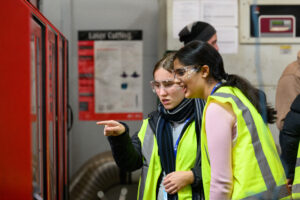
While there, we saw a fire engine destined for Australia to battle wildfires. This particular vehicle could be DRIVEN into a forest fire, and can survive up to 6 hours in a fire. We also got to see a metal sheet laser cutter in action.